Musings On Design: Jeffrey Gordon Smith Landscape Architecture Part 1

Eye of the Day|Jeffrey Gordon Smith Landscape Architecture

Jeffrey Gordon Smith Landscape Architecture and the Spirit of Place

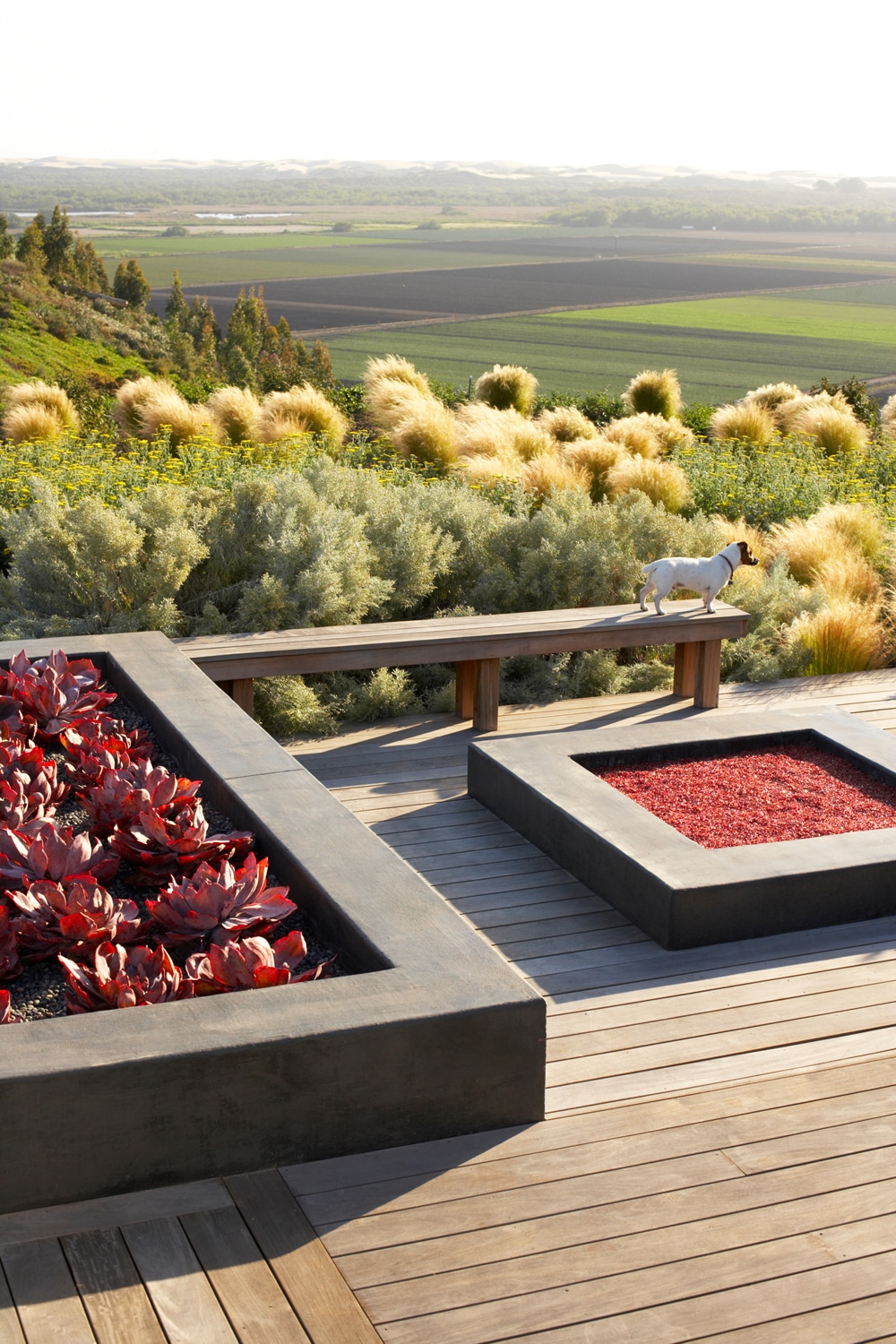
The spirit of a place. This concept comes up throughout our interview with Jeffrey Gordon Smith, principal architect of Jeffrey Gordon Smith Landscape Architecture based in Baywood-Los Osos, CA. There is a respect and celebration of space throughout the work of Smith and his firm. They encourage clients to celebrate where they live and do so by connecting the designs of their projects to the existing natural landscape. From a chain of volcanic plugs corresponding to an outdoor space’s pergola design to a Japanese garden in the Pacific Rim evoking neighboring farm fields, site and architecture speak to each other and create a cohesive landscape.

Eye of the Day|Jeffrey Gordon Smith Landscape Architecture
An Arroyo Grande design mimics farm fields below

Eye of the Day: What lead to you becoming a landscape architect and starting your own firm?

Jeffrey Gordon Smith: I was always interested in design. Basically, I wanted to go to school for architecture but the program at Cal Poly was impacted. So, I consulted my father and he directed me to a similar profession — Civil Engineering. I got into Civil Engineering only to find out later it was just impacted as Architecture. I think they made a mistake letting me in because my grades weren’t all that great. I spent a year in Civil Engineering taking all the calculus, physics, all the brutal courses and found out it wasn’t really my gig. Not only from a professional standpoint, but it just didn’t have enough of an artistic side to it I think.

I basically fell into Landscape Architecture. I started looking back into the school’s environmental design, landscape architecture, regional planning, architecture, and architectural engineering. I found Landscape Architecture almost by accident. I was really interested in the curriculum and what it potentially had to offer. I’m not really religious, but when I started taking courses, it was like I was a born-again Landscape Architect –that was it for me.

My father suggested I start an internship with a Landscape Architect. A firm was working for his company so he helped me get an internship with Emmett Wemple and Associates—one of the most important landscape architects in the Los Angeles area 50 years back. He did the Malibu Getty and other important projects. I did a summer internship and got more of a sense of what the field was about.

Eye of the Day|Jeffrey Gordon Smith Landscape Architecture
A Japanese style garden that speaks to the existing landscape.

EOD: So you’ve been involved with Landscape Architecture since college. When did you start Jeffrey Gordon Smith Landscape Architecture?

JGS: God… I don’t know. I actually don’t know. I’ve probably been practicing for 15 years. I worked for several big firms before. Out of college, I worked for Peridian down in Irvine and they were one of the largest firms at the time. I was hired to work on a Spanish theme park in Japan. I got to be one of the head designers on a 172-acre Spanish theme park in Japan. I got to be involved at a high level in design right out of school. This was right before the great recession in the 90s. I thought I was such a rock star, but they started to get more into residential housing that wasn’t very creative. So I left and landed a job at Schwartz, Smith, Meyer with Martha Schwartz, this rock star of landscape architects at the time, very controversial. She was married to Peter Walker, who’s probably the landscape architect of our time right now. She splintered off and created her own design team with two others. We were doing high profile projects around the world. We worked for Rem Koolhaas, Isozaki, Frank Gehry. Then the recession hit and I was going from job to job and the profession was suffering. It was really tough to run a business in this economy. So I got kind of disenchanted with the profession because everyone was so unhappy at the time financially. It was really a tough time to be starting out.

Eye of the Day|Jeffrey Gordon Smith Landscape Architecture
The stone paving and railing across the deck borrows the curve of the shoreline in the distance

I started doing side work with models—specifically model trees for one of the finest model tree makers in the world. I’ve worked on models from all over from Disney Concert Hall, to Richard Meyer, to Guggenheim Museum. I started moonlighting and doing my own stuff, a couple of outside projects and started doing a lot of production work for a house designer. The economy started swinging back on high end homes in Portola Valley and Bay Area. I was doing a lot of work and never decided to open my own office but I was doing so much that I needed all my work together, a title block, business cards…had I needed to open up my own office it would have been a daunting task, but it just kind of happened over a couple of years where I realized I needed to do this and my own work ended up keeping me going.

Eye of the Day|Jeffrey Gordon Smith Landscape Architecture
The materials and design connects to the site.

EOD: This is essentially where you branch off and start your own company. Your firm focuses on high end landscape design for a range of clients in residential and commercial projects. What design philosophy do you personally bring to each project? Is it important that you complete a design with a certain goal in mind? 

JGS: When I started out on my own I was working on these cookie-cutter, McMansion stuff that wasn’t very creative or innovative. I was always trying to push the edge but really to also pay the bills. I was fortunate enough in the real estate market  to buy property in San Francisco and sell it at the right time during the height of the tech industry—right place, right time. I was able to look at what I was doing and step back. I think we make decisions too often on money. Since I had a little breathing room from the house sale I looked in the mirror and asked myself what do I want to be when I grow up. I wanted to do much more interesting work and that got me into this present-day philosophy that I have.

I never set out to do a mission statement about what I needed to do. It was really trying to find a little bit more soul into what we’re working with and trying to find—sometimes I hate to use the word– the genus loci or the “spirit of the place.” It was something we always talked about in school and I felt like how could I dare to say that I could conjure up the spirit of a place or the power to call that. But I’ve been doing this so long that I think we have a fairly good tact and understanding in what’s going on in the process of the space or place and trying to extract out the greatest elements of that place. It’s almost as if you were to take a volume knob and crank it up and ask what this place wants to be, what is this place talking about, and really trying to put feelers out and be sensitive to what’s going on.

Eye of the Day|Jeffrey Gordon Smith Landscape Architecture

We came up with that idea of regionalism and looking back at my work over ten years that I kind of changed what I wanted to do and people started to follow my work and request work that wasn’t that McMansion type but the uniqueness of site. I started getting work because of this versus just working for someone who was trying to sell a house. It was more of the art side coming out and exploring that and pushing it in each project.

Not every project has that but I try to use a three-prong approach: site, architecture and client in trying to explore and unite it. You’re marrying the site to the architecture and back to the client. That’s basically been the formula of what we try to draw on each project. Sometimes you get an amazing site or neighbors on all sides, but you’re always given typically architecture which sometimes can be “architorture”, or it could be nondescript, bastardized architecture that you’re playing a smoke and mirrors game of don’t look at the architecture but look at the site. The other component of client is going in and interjecting into the architecture how the client lives, what they’re interior is about, and relate interior to the exterior. So that three element approach has been a foundation for what we do and springboard from.


Stay tuned next month for Part 2 of this interview!
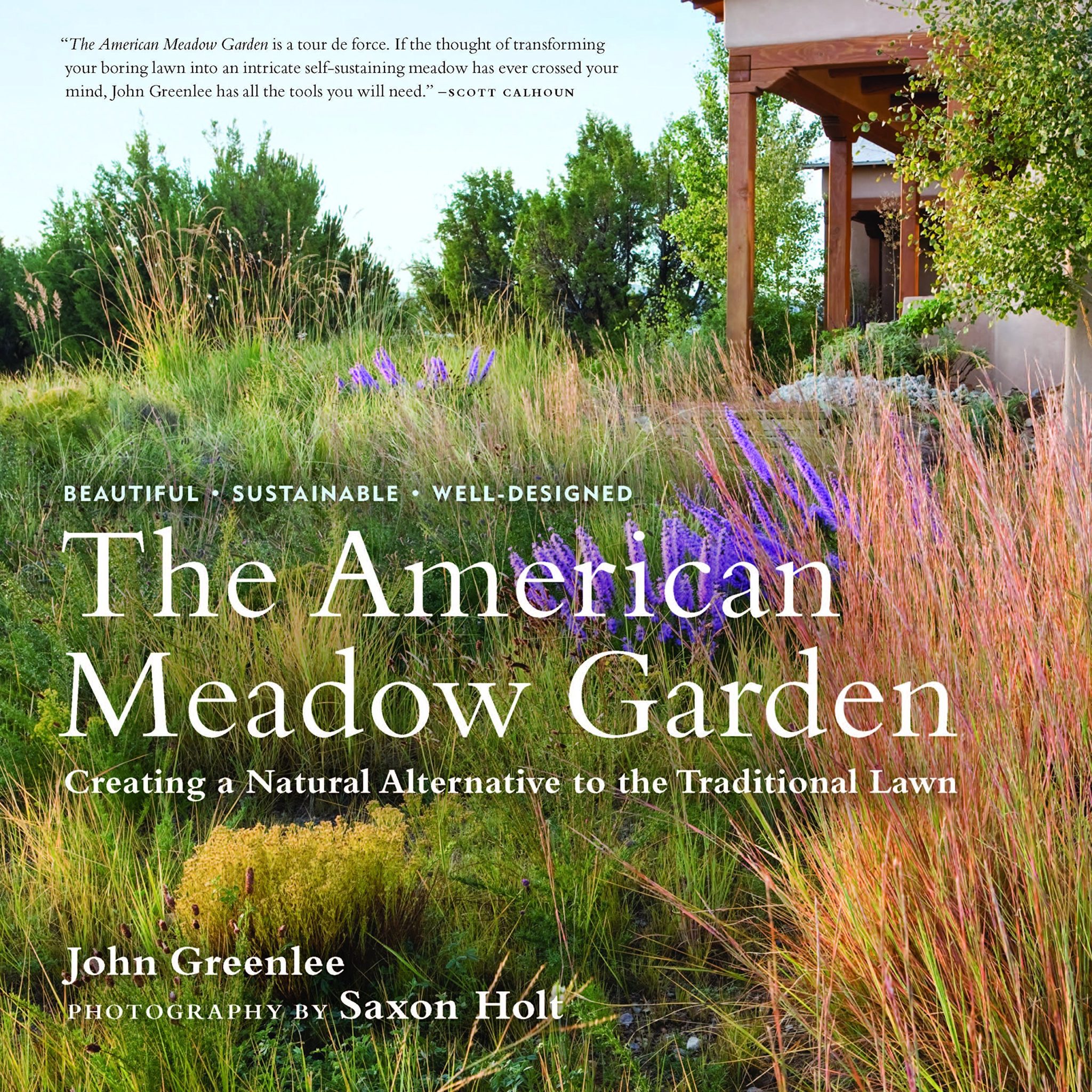

Book Review: The American Meadow Garden by John Greenlee

Eye of the Day|American meadow|John Greenlee

“We’ve reached a stage where we can no longer follow past practices unthinkingly, particularly when those practices are wasteful and injurious to the environment. It’s time to get rid of the old-fashioned lawn and embrace a sane and healthy future: the designed meadow.” – John Greenlee

In The American Meadow Garden: Creating a Natural Alternative to the Traditional Lawn, “grass guru” John Greenlee leads us into a new way of thinking about grass.  He uses the words “glade,” “grassland,” “mead,” “savanna,” “pasture,” “sod,” and “meadow” among other terms, to describe areas around the world that are largely treeless, grass-covered landscapes.

These words paint an image of golden or green grassy carpets, rippling in a breeze. In this beautiful book, we are given a portfolio of meadow gardens and a guide to grasses for meadows and how to maintain them.

We’re constantly looking for ways in which to cope with our water-challenged world in California and Greenlee offers alternatives to our lawn habit. In many areas, aquifers are dwindling and water is increasingly scarce. There is no longer enough of it to supply lawns. Growing populations and dwindling supply is our scary future and our landscapes must change with the times. The American Meadow Garden was published in 2009, but the relevance of the information and ideas within its covers increases every year.

The American Meadow Garden: Creating a Natural Alternative to the Traditional Lawn, by John Greenlee, Timber Press 2009


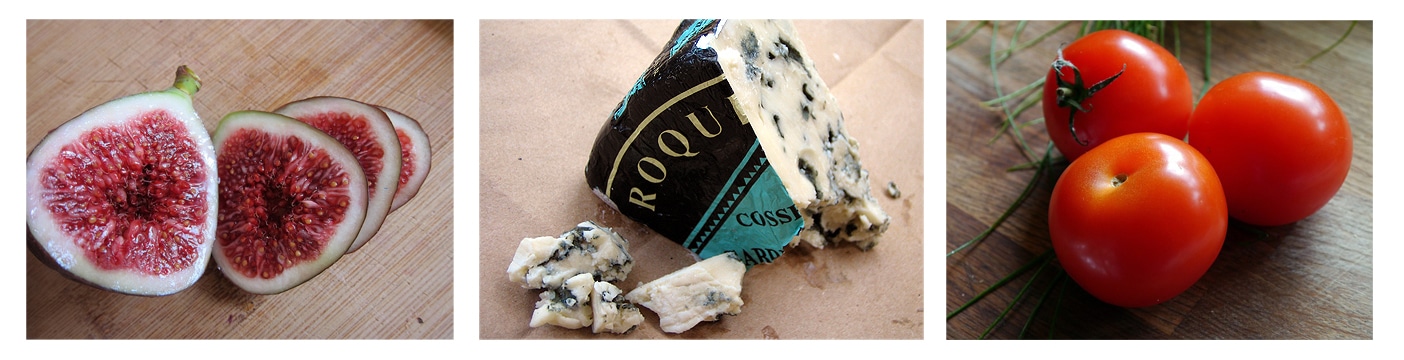
Garden Recipe: Tomato, Fig, and Cheese Salad

Eye of the Day|Garden Salad|Fig Cheese Tomato Salad

Garden Recipe: TOMATOES FIGS CHEESE

We have had a tiny fig tree in our back yard for seven years…so maybe we are graced with four or five velvety, crunchy, voluptuous figs each summer.  This year it is veritably FILLED with figs.  It’s still a tiny tree, but it’s trying harder this time. Daydreaming of my favorite garden fruits and vegetables (figs and tomatoes) makes me want to eat this until October.

Ingredients

  • 1 T Balsamic vinegar
  • ¼ t fine sea salt
  • ¼ c really good olive oil
  • 3 T pine nuts
  • 1 perfectly ripe large tomatoes
  • ½ lb (or more!) ripe figs, cut in quarters
  • 1 oz crumbled Roquefort cheese
  • 1 t fresh thyme leaves
  • Black pepper

Whisk the vinegar and salt together, then slowly whisk in the olive oil.  Toast the pine nuts in a small skillet until light golden.  Spread tomato slices on a large plate and scatter the figs and pine nuts over the tomatoes.  Sprinkle with the cheese and thyme then drizzle with the dressing and finish with freshly ground black pepper to taste.

Photo Credits:
Roquefort Cheese, Creative Commons, Roquefort Cheese by Cyn Furey is licensed under CC BY-NC-ND 2.0
Figs, Creative Commons, this year, i have discovered an appreciation of figs by snickclunk is licensed under CC by 2.0
Tomatoes, Public Domain Dedication, Tomatoes by Image Party is licensed under CC0 1.0


Garden Cocktails: Backyard Fig Margarita

Eye of the Day|Garden Cocktails|Fig Margarita

Garden Cocktails: Backyard Fig Margarita
Pick some figs from your little tree in the back yard, or get them from the Farmers’ Market…

BACKYARD MARGARITA

1 ½  oz. silver tequila
½  oz. fig simple syrup (it’s easy, you can make it)
½ oz. Cointreau or Triple Sec
¼  oz. fresh lime juice

Combine all ingredients and shake with ice. Strain into an ice-filled glass and garnish. With a lime wedge on a pick with a fig wedge.

Fig  Simple Syrup
1 pint figs
2 cups water
1/2 cup sugar

Remove the stems from the figs and cut into quarters.. Bring the figs, sugar and water  to a boil, lower the heat and simmer until the syrup has reduced by half. Let cool to room temperature and strain into a clean glass jar.

Photo Credit: Pinterest


Tips for Successful Edible Gardening by The Conscious Garden

Eye of the Day|Edible Gardening|The Conscious Garden

Tips for Successful Edible Gardening by The Conscious Garden

In Southern California we love to eat healthy food and there is no fresher, tastier or more nutrient dense foods than those that you pick from your own garden or that you buy from the farmers market.  It is important to know that your food is free of chemicals, organic and full of nutrients,  so what better way to know what is in your plants than growing it yourself?  I want to share with you some of the main things to remember when setting up an edible garden, and whether you have a yard or not, it IS possible!

I have been growing food since I was a kid, and one of the things I have learned, is that plants will grow in anything.  So, what ever you have to grow food in, whether it is a raised bed, beautiful container or just a simple plastic drum, you too can have edible vegetables right at your home.

Tips for a Successful Edible Gardening

Soil
The key to having good nutrients in your food is in the soil and that is also the advantage of growing at home: you can truly know if it is organic and what’s in it as you plant.  Use a premium potting soil to begin with.  If you have a large garden, use a mixture of different composts such as manure and worm castings.  The soil provides the nutrients to the plants and allows them to be strong.

Water
Edible plants require a little bit of water often and if you add a drip system, it will ensure the plants are getting water directly to their roots where it is required and it makes the garden more water efficient.  This is especially important in container gardening, and it will make life SO much easier.

Plants
When you decide to plant, choose seedlings from a good organic local supplier, providing bio-dynamic organic seedlings. This will ensure that the roots are strong and will stand up to transplanting and our current drought conditions, giving the plants a good start to their edible nutrient supplying journey. It is also time efficient.

Pest Control
Be ready for providing pest control – and keep it organic, non-toxic.  Sluggo for snails, Organocide for bugs and Serenade for diseases.  I find that if you notice bugs attacking a particular plant, leave one of those plants free of pest control and the bugs will eat that one plant and leave the rest alone.  (Periodically remove the bug-plant and destroy it removing the bugs and disease).

Feeding
Remember plants need food too!  Fish and kelp as the master formula is great. Or you can use an organic food with mycorrhizae. The numbers on the pack of organic fertilizer should not be higher than 5-5-5, which are nitrogen, phosphorus and potassium in a low balanced form.

Just remember, take care of your edibles and they will take care of you. Don’t be afraid to try your hand at an edible garden. If you see something you would like to plant, try a handful of plants and see how it goes.  Plants are sustaining and will grow for you if you just give them a chance.

I am available for consultations or garden support to fulfill your edible garden desires.

Happy Planting!

Sagar Faucheaux
The Conscious Garden

Phone:  (805) 745 5555
consciousgarden@


The Art of Building Large Terracotta Pottery

Eye of the Day|Baked Earth|Scott Semple Large Terracotta

The Art of Building Large Terracotta Pottery

In all my days of fascination with clay, there is one tool that I would call my tool of choice: the wheel. But the two things that have influenced me most are my teachers and my travels.
Eye of the Day|Baked Earth|Scott Semple Large Terracotta

Over the past thirty years or so I have had the great fortune of traveling throughout the world.  My interest in large format pottery began in the early 90s and quickly became one of the key purposes of my explorations.

There are many ways to build a large, ceramic container.  In Thailand, I watched two assistant potters feed a rope of clay the size of my leg and 20’ long, over their shoulders to a master potter, who would very slowly spin a crude wheel and pinch the coils on top of each other.   This seems to be the most common way cultures build large terra cotta containers.
Eye of the Day|Baked Earth|Scott Semple Large Terracotta

Recently I was a guest artist at a conference where, over the course of three days I made a 7’ Amphora using two wheels. I was positioned next to next to a family of Koreans who were making traditional Kimchi fermentation jars. These things were huge! They used the same coil/pinch method, but paddled the shapes into the forms.   In Georgia (Eastern Europe), they have been fermenting red wine for thousands of years in enormous ceramic vases called Qvervi; they use the same method. Spain probably has the largest pots I’ve ever seen called Tinajas. These absolutely spectacular containers are also used for fermentation,  as well as storing water.

Throughout my travels I have found that around the world, large terracotta forms are still produced for a great variety of uses.