Why Italian Terracotta Sets the Standard for Professional Landscape Projects

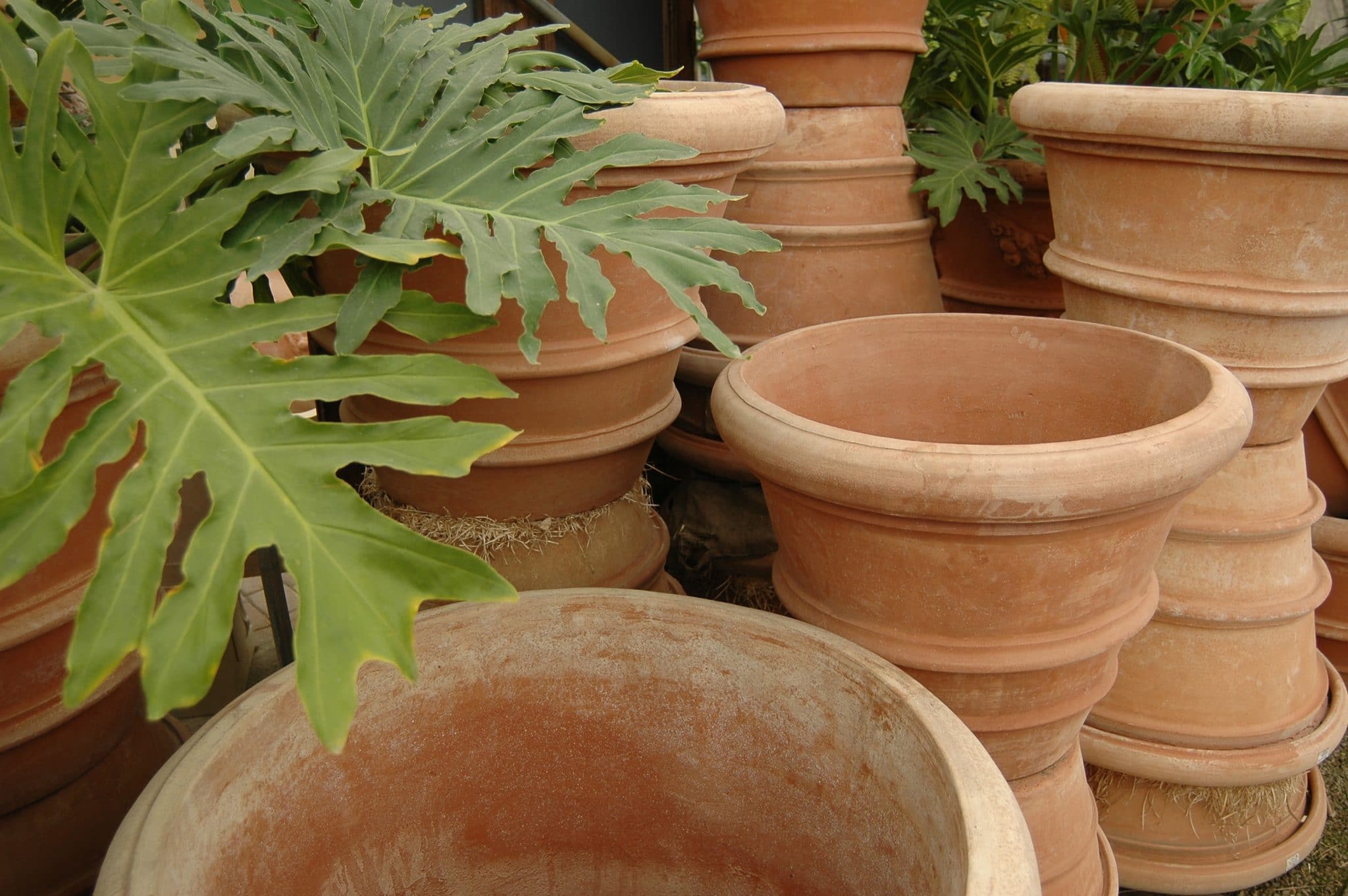
grouping of Italian terra cotta planters

When landscape professionals specify planters for high-end installations, they are not just selecting containers, they are choosing materials that will define spaces for decades to come. For trade professionals who demand both aesthetic excellence and uncompromising durability, understanding what makes Galestro special is not simply helpful, it is essential.

This article explores the unique properties of Galestro clay that position it as the gold standard for outdoor planters, from its technical performance advantages to the timeless design flexibility that keeps it at the forefront of professional landscape projects.

What Is Galestro Clay?

Galestro is a naturally occurring clay formation found in the geological heart of central Italy, particularly in the Chianti region of Tuscany. This ancient sedimentary clay has been the foundation of Italy’s terracotta tradition for more than five hundred years, valued by artisans who understand that exceptional raw materials lead to exceptional results.

For many, Galestro is better known by another name: Impruneta clay. The Tuscan hill town of Impruneta sits atop a mountain of this extraordinary material, its landscape intertwined with centuries of artisanal craft. Here, families have passed down their knowledge through generations, shaping vessels that have found their way into villas, gardens, and estates across Europe and beyond. Impruneta has become synonymous with some of the world’s most revered pottery, but the clay itself has always been Galestro.

What sets Galestro apart from ordinary terracotta clays is its distinctive mineral composition and remarkably fine texture. The clay forms dense, uniform particles that allow vessels to be shaped with consistent wall thickness and exceptional structural integrity. During the firing process, Galestro develops its signature warm terracotta tones, ranging from orange to deep red, with natural variations in color that reflect its organic origins.

Equally important for outdoor applications, Galestro’s composition creates a surface that welcomes the development of a natural patina over time. Rather than fading or appearing weathered, Galestro planters gain character, deepening in color and developing subtle surface textures that enhance their beauty as they mature. The beauty of this transformation is evident when you encounter a terracotta planter that has spent decades or even centuries in the landscape, quietly recording the touch of sun, rain, and time.

Technical Advantages for Outdoor Use

For landscape professionals, the technical performance of Galestro clay translates directly into project success and client satisfaction. Its unique properties deliver measurable advantages that matter in real-world installations and across diverse climate conditions.

Superior Frost Resistance
Galestro’s low water absorption rate, typically under 8 percent, allows these planters to withstand freeze-thaw cycles that would crack inferior materials. Real-world testing confirms frost resistance down to -15°F, making Galestro suitable for installations in a wide range of climate zones, including areas with frigid winters.

Climate Durability
Whether facing the intense heat of southwestern summers, the humidity of coastal environments, or the temperature swings of midwestern climates, Galestro planters maintain their structural integrity. The clay’s stable composition resists the thermal expansion and contraction that can stress or fracture lesser materials.

Weight and Stability
The natural density of fired Galestro adds weight and stability that can be beneficial in many settings, particularly public spaces or rooftop installations. While wind resistance depends on size, shape, and placement, this inherent mass often reduces the need for additional anchoring systems.

Large Format Capability
Unlike many terracotta materials that become unstable at scale, Galestro’s structural properties allow for impressive large-format vessels without risk of cracking or failure. This makes it possible to create dramatic focal points and signature design elements in both residential and commercial landscapes.

Design Flexibility and Aesthetic Value

Galestro’s natural earth tones complement both classical and contemporary design schemes with equal sophistication. In traditional Mediterranean or Tuscan-inspired gardens, these planters provide an authentic connection to centuries of design heritage. In modern spaces, their clean lines and subtle color variations add warmth without competing with architectural elements.

The patina that develops over time is one of Galestro’s most distinctive advantages. Rather than requiring maintenance to preserve appearance, these planters actually improve with age. The natural weathering process creates subtle color deepening and surface texture that adds visual interest and authenticity, qualities that cannot be replicated through artificial aging or surface treatments.

Because our Galestro planters are handmade by Italian artisans using traditional techniques, each piece carries slight variations in tone, form, and surface detail. These nuances prevent the uniformity of mass-produced alternatives. For bespoke and signature projects where uniqueness is valued, this artisanal quality provides a sense of distinction that clients notice and appreciate.

Environmental Responsibility and Sustainability

In an era where environmental considerations increasingly shape design decisions, Galestro clay planters offer meaningful sustainability advantages that align with responsible landscape practices.

The clay is sourced exclusively from naturally occurring deposits in central Italy and requires no synthetic additives or chemical treatments in its production. Traditional firing methods, often powered by locally sourced fuels, have a lower environmental impact compared to large-scale industrial manufacturing. The close proximity between clay sources and artisan workshops reduces transportation emissions, while the small-scale production model supports regional economies and preserves traditional craft.

Perhaps most importantly, Galestro planters are an investment in longevity. While lower-quality containers often require replacement after only a few years, properly specified Galestro planters can perform for decades. This extended lifespan significantly reduces environmental impact by eliminating repeated manufacturing, shipping, and disposal cycles.

Galestro’s environmental profile provides a clear advantage for landscape professionals working with environmentally conscious clients, LEED-certified projects, or sustainable design initiatives. Its natural composition, local sourcing, and exceptional durability align seamlessly with green building principles while delivering superior long-term performance.

Applications in Landscape Projects

The combination of technical performance and aesthetic excellence makes Galestro planters a natural fit for projects ranging from intimate gardens to large-scale public spaces. Their warm tones and commanding presence create focal points in courtyards and garden rooms. In landscapes inspired by Mediterranean and traditional European design, Galestro provides an authentic material connection while remaining equally reliable in drought-tolerant or water-wise applications.

In commercial, hospitality, and public installations, the clay’s strength, frost tolerance, and stability support long service life and reduced maintenance costs. For luxury estates and high-end developments, Galestro’s artisanal heritage and timeless character align seamlessly with elevated design expectations, offering both lasting performance and visual distinction. Its versatility allows landscape professionals to specify a single material across a variety of settings without compromising on quality, durability, or design impact.

Investment Value and Client Positioning

When presented effectively, Galestro planters function as landscape investment pieces rather than simple containers. Their authentic Italian heritage, artisanal craftsmanship, and proven longevity create perceived value that extends well beyond their functional role. High-end residential clients, luxury hospitality projects, and prestigious commercial developments increasingly seek materials with provenance and story that mass-produced alternatives cannot offer.

From an economic perspective, Galestro’s value becomes clear through lifecycle cost analysis. While the initial investment may be higher than standard terracotta, the elimination of replacement cycles, lower maintenance requirements, and improved appearance over time create superior long-term value. For estate gardens, luxury hotels, and high-profile commercial installations where image matters, this value proposition resonates strongly with decision-makers.

Because of their quality and exclusivity, Galestro planters can support premium project budgets. Landscape professionals who position these materials effectively can elevate their services, differentiate their proposals, and justify higher project values. The ability to offer authentic Italian craftsmanship alongside technical superiority builds trust, reinforces professional expertise, and enhances client loyalty.

For property developers and commercial clients, Galestro installations also contribute to overall property value. The perceived luxury and authenticity of Italian terracotta create positive associations that extend beyond the planters themselves, strengthening marketing narratives, supporting brand image, and improving tenant or guest retention in commercial and hospitality environments.

Why Trade Professionals Choose Galestro from Eye of the Day

At Eye of the Day, we understand that landscape professionals need more than beautiful planters. They need reliable partners who understand the demands of trade projects. Our Galestro collection reflects that understanding, combining timeless Italian craftsmanship with dependable service and support.

For more than twenty years, we have sourced Galestro planters directly from Italian artisans who have perfected their craft over generations. These close relationships ensure authentic materials, traditional manufacturing methods, and the consistency and availability required for professional installations.

Our Galestro selection includes a wide range of sizes and forms, from intimate herb pots to impressive large-scale containers. This flexibility allows designers to create cohesive planter programs across a wide variety of spaces and applications. Whether a project calls for matching sets in a formal installation or varied pieces for naturalistic designs, our inventory provides the depth and range professionals need.

Equally important, our trade support team understands the realities of landscape projects. We offer guidance on scale, style coordination, and site suitability to ensure that every planter selection enhances, rather than compromises, the design vision.

When your reputation depends on specifying materials that perform beautifully for years to come, Galestro clay from Eye of the Day delivers the combination of technical excellence, environmental responsibility, and timeless aesthetics that define truly successful landscape installations. More than functional containers, these planters represent investment pieces that enhance property values while supporting sustainable design practices.

Ready to explore how authentic Italian Galestro planters can enhance your next project? Contact our trade team to discuss your specific requirements and experience the Eye of the Day difference in professional landscape materials.

Reads and Treats: The French Garden

Let a staple of a the classic French garden inspire you in the kitchen. Lavender punches up this special cocktail recipe and makes a great addition to shortbread.

BEE’S KNEES

This is an old-fashioned cocktail and often considered the gin drink for the non-gin drinker. Your house will smell like the middle of summer in Provence while you’re making the Lavender Honey Syrup for this recipe.

French Garden edible garden cocktail recipes shortbread lavender

Servings: 1 cocktail

INGREDIENTS

  • 2 oz gin
  • 3/4 oz lavender honey syrup
  • 1 oz lemon juice
  • 1 teaspoon freshly picked lavender blossoms

INSTRUCTIONS

Combine all ingredients in a shaker full of ice. Shake vigorously for 10 full seconds. Double strain into a cocktail glass and garnish with a lavender sprig.

Lavender Honey Syrup

  • 1/4 cup honey
  • 1/8 cup hot water
  • 1 teaspoon lavender


INSTRUCTIONS

Lavender Honey Syrup

Combine hot water with honey and stir until evenly mixed. Add lavender, stirring to combine. Let cool, approximately 30 minutes, then pour through a fine mesh strainer to remove lavender.


And while you’re at it, having picked the lavender blossoms, make a bunch of these cookies. There is no reason not to enjoy a couple of these with your Bee’s Knees.

LAVENDER SHORTBREAD COOKIES

  • 1 cup butter (2 sticks), softened
  • 1/4 cup granulated sugar, plus extra for sprinkling on cookies
  • 1/4 cup powdered sugar
  • 1/4 teaspoon salt
  • 1 cup all-purpose flour
  • 1 cup cake flour
  • 1 tablespoon chopped fresh lavender
    French Garden edible garden cocktail recipes shortbread lavender

In a stand mixer fitted with a paddle attachment, cream the butter, granulated sugar, powdered sugar, and salt until thoroughly combined, about 3 minutes. In a separate bowl, sift together the all-purpose and cake flours. Mix the flour mixture into the butter mixture in 3 additions, scraping down the sides of the bowl in between each addition. Add the lavender and mix to just combine.

Roll out the dough to a 1/2-inch-thick rectangle. Wrap in plastic wrap and refrigerate for at least 4 hours.

Preheat the oven to 350ºF. Cut the dough into 2 x 1-inch bars and place on a parchment-lined baking sheet. Bake the cookies until just golden at the edges, about 20 minutes. Remove from the oven and immediately sprinkle with granulated sugar. Let cool completely before serving.

Makes about 2 dozen cookies.


Elements of French Garden Design

French Garden Design

Elements of French Garden Design

The classic French garden invokes images of bright lavender, ordered gravel paths, calm reflecting pools, symmetrical planting beds of boxwoods and shrubs—maybe a stone bench waiting for someone to rest on it. The Old World charm of French gardens fits beautifully with classic country homes and chateaus or today’s modern styles. Designing gardens in the French style is going to be different from other types of landscape design but it is surely influenced by other styles.

French garden design closely borrow from Italian landscapes with their similar themes of symmetry. Moroccan courtyard gardens reflect the need for cooling elements and protection from the elements. Many French gardens include a water feature. Mediterranean gardens almost always contain terracotta pottery while French gardens use classic wood planter boxes or Anduze vases. English gardens with their exuberance for abundance and flowers are the inverse of the cooler color palette of French garden design but share a love for native elements. All these developments influenced each other to give us the classic French garden.

The Basic Elements of a French Garden

Below are the basics that most French gardens incorporate, and we will discuss them in detail as you consider this style in your own landscape.

  • Order and Symmetry
  • Neat and Defined Spaces
  • Cool Color Palette
  • Stone Elements

Order Over Nature

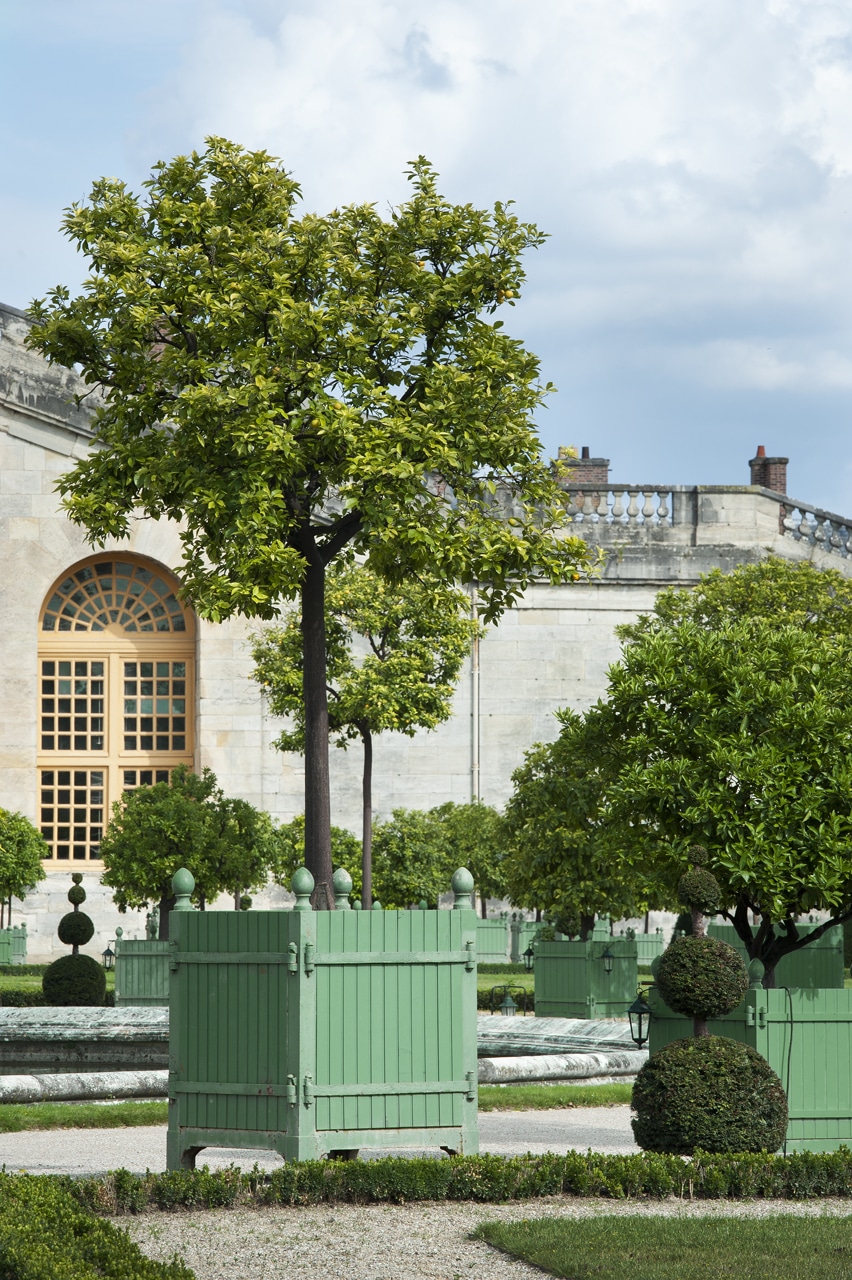
Above all else, symmetry and geometry are the main hallmarks of French gardens, imposing order over nature. The epitome of this mathematic approach are the gardens at the Palace of Versailles. This is the best in formal French garden design and easily recognizable with its symmetrical gravel paths, Versailles citrus planters, ordered groves and neat topiary, and principle axis from which the design flows. All French gardens have a little Versailles in them.

The ideals of a French garden reflect the history of France itself. In the 17th century, King Louis XIV’s palace at Versailles was the seat of power. Control was reflected in all aspects, even nature:

By shaping nature, men can exert control over their surroundings and create small paradises modeled after their own ideal of beauty… Louis XIV became an orchestrator, not only of nature but also of how visitors viewed this landscape. The gardens of Versailles are not natural; rather they represent the triumph of man over nature. As the Sun King, he imposed absolute control over nature, subjugating wilderness to his own ideal of beauty. (Robert Schwartz)

French garden designers worked like architects, extending the concepts of geometry, optics, and perspective to the garden. Gardens are sectioned off by tall hedges and topiaries the way walls define spaces. Topiary is an extension of that control. Often trimmed into ornamental shapes, like balls and triangles, man is literally defining the growth and shape of the plant. These are placed in rows along the main axes of the garden and line pathways or border sections. Those pathways are laid out like hallways that flow from one “room” to the next. The rooms being grove sections, planter beds, or lawns. Trees are planted in the same way, identical ones lined up neatly in a bosquet, a formal plantation of trees. These are planted to line pathways and after growing high, the tree tops are trimmed in neat shapes. (Wiki)

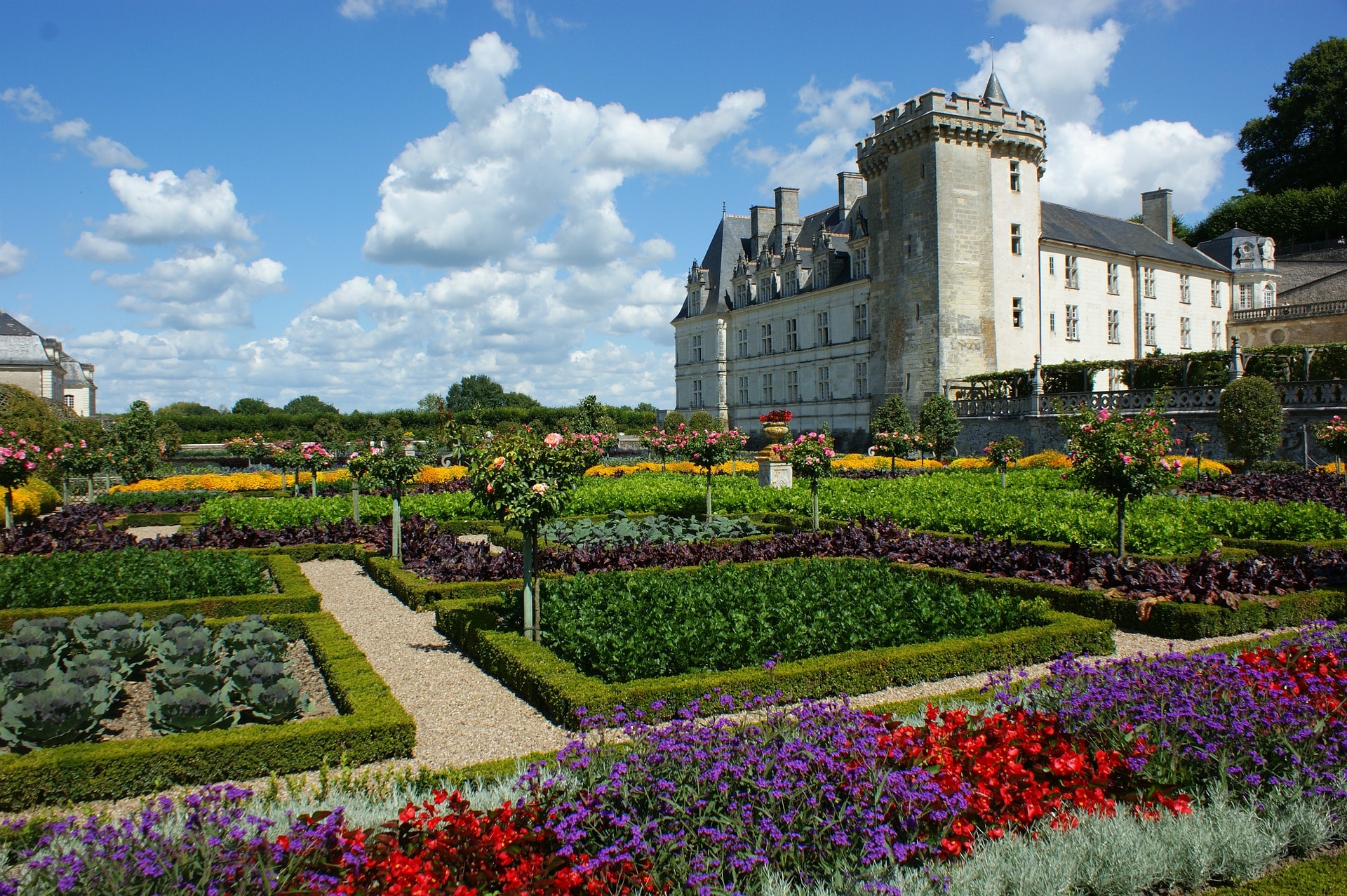
The design is all about perspective because French gardens are meant to be viewed from all angles, even above from a terrace or window of a chateau. Many famous French gardens, like the one at Chateau de Villandry, are overlooked by the main property. The principal axis is crossed by one or more perpendicular perspectives and alleys. The eye is always drawn to a central feature whether a pool of water, a chateau, even a statue.

Neat and Defined Spaces
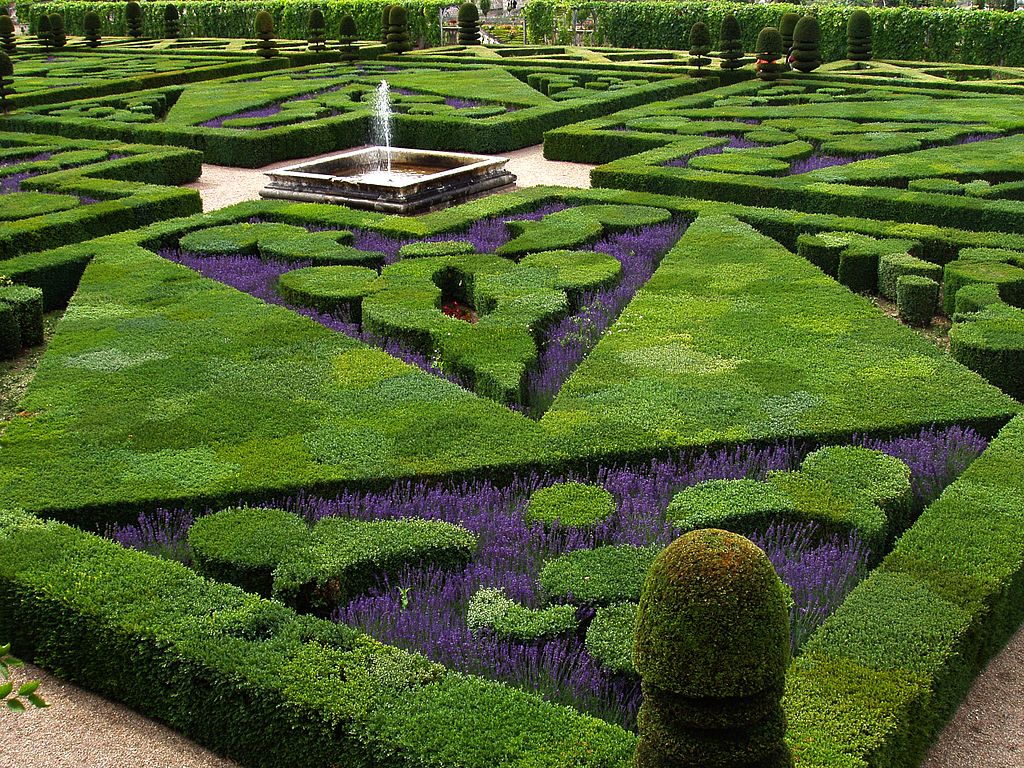
There’s a saying that there is a place for everything and everything in its place. French gardens are the neat and tidy students of garden design. The main plan is to create an overall sense of order and control. From there, the ground level does the bulk of the work creating elaborate parterres, or planting beds. These parterres are the most easily recognizable aspect of  French garden design. Often in the shape of elegant squares, ovals, circles, or scrolls, these patterned planting beds complement not just the design, but can be seen from the main house or building. They are usually edged with low boxwood or other shrubbery that help define space and keep edges neat.

Planting beds tend to be more complex closer to the main structure, filled with artfully designed boxwood because they can be easily seen from the main structure or terrace. Farther out, the planting beds become simpler, usually enclosing grass or a water feature.

Whether small or expansive, immaculate lawns continue the theme of ordered nature and create a nice balance against more elegant and intricate details. Lawns are often rectangular or square, creating lines of interest across the axis and define sections of the garden. Pathways, often made of gravel, border garden elements like lawns and create avenues to travel throughout the design.

Cool Color Scheme

French gardens usually incorporate a cool color palette that emphasizes greens and whites—think boxwood and stone gravel pathways. Rows of lavender bring in purple and reflecting pools the cool blues. Because ornamental flowers were rare in France in the 17th century, the color palette was limited. Trees, bushes, and topiary had to stand out in other ways, so they were trimmed in geometric forms. For décor, the greys and blues of an iron bench, pergola, or trellis reinforce the cool color scheme. Introducing water features like reflecting ponds, pools and fountains plays up the geometric patterns as they are often in circular or rectangular shapes.

Stone Elements

Whether seen in gravel paths, statuary, or terraces, stone is an easy element to incorporate into a French garden design. It provides balance against the plantings and underpinnings to the entire design. Planting beds can even be edged with stone. Pathways enforce order by controlling the route of a visitor to the garden and continues the aspect of geometry with straight lines across and perpendicular to the axis.

Stone garden elements like statues, columns, or follies also provide points of interest throughout the garden design. They are often the central feature of enclosed groves or mark intersections on pathways. They can also line pathways, interspersing trees and plants in a repetitive and ordered pattern. Sculpture and statuary in classic French style are of mythological figures like cherubs, nymphs, goddesses, and warriors.

Stone is also used for more than decorative elements and often makes up the all-important terrace where one can enjoy the view of the whole design. Stone can also border boxwoods and planter beds. When incorporating water elements, stone coping encloses pools and fountains.

French Design for All

The hallmarks of a French garden can be seen in more formal and strict gardens like the grand ones at Versailles or as simple as a potager, or kitchen garden. Planting beds are sectioned off for specific herbs and plants meant for cooking. Potagers are more practical, but their design borrows from the rich tradition of French formal gardens. Upkeep will require regular maintenance for any garden using this style. Provencal style gardens overflow with color and have a charming wildness to them, but also incorporate the same elements of stone, boxwood, and water features. Precise care and control are required for traditional French design, but the results are fantastic. French garden design continues to attract garden lovers and inspire gardens all around the world.


References:

Wikipedia contributors. “French formal garden.” Wikipedia, The Free Encyclopedia. Wikipedia, The Free Encyclopedia, 26 Jan. 2018. Creative Commons 3.0

Robert Schwartz. “France in the Age of Les Misérables, Formal Gardens.”

Photo Credits:

Creative Commons. CCo Creative Commons. Pixabay.
Creative Commons, French Formal Garden in Loire Valley by Aernoudts jean is licensed under CC BY 3.0.


My Top 5 Gardens of France

Favorite French Gardens

My Top 5 Gardens of France

It’s all things French this month. Suzi gives a tour of her favorite gardens of France. She’s got a few in Paris and one from the Loire Valley.

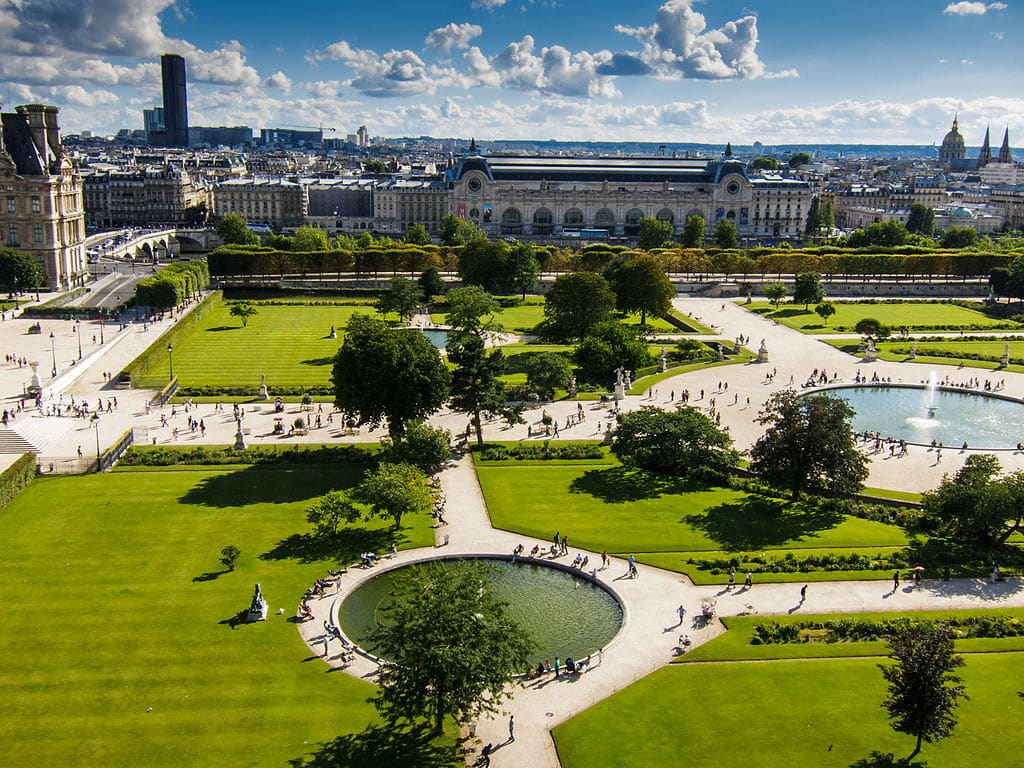
1. Jardin des Tuileries

The oldest public garden in Paris, the Jarden des Tuileries was built for Catherine de Medici in the 16th century. The Tuileries is located between the Louvre Museum and the Place de la Concorde on what was originally a clay quarry occupied by tile workshops (Tuileries). It is one of Paris’s most visited gardens because of its central location and because it’s a perfect spot for people watching among the flowers.

2. Jardin du Luxembourg

This public garden feels like an oasis in the middle of Paris. Besides being a huge green space with an exceptional variety of plants and trees, it’s a great place to rent a tiny sailboat and become a sailor for the day maneuvering your boat through the fountains, or watch a traditional Guignol puppet show, or admire the statuary. The Jardin du Luxembourg is one of the most beloved public spaces in Paris.

3. Jardin des Plantes

More than just a public garden, the Jardin des Plantes is the main botanical garden in France. Situated on the Left Bank, the garden was created in 1626 under the name of “Jardin du Roi” (Garden of the King). The garden features historic glasshouses, a maze (le labyrinthe), a small zoo and a beautiful rose garden.

4. Père Lachaise Cemetery

I know, it’s kind of strange that a favorite green place is a cemetery. The largest in the City of Paris, Père Lachaise is also the first garden cemetery. My daughter and I spent a spooky grey Halloween afternoon there getting lost and loving the whole thing. Jim Morrison is NOT the only attraction.

5. Chateau de Villandry

Chateau de Villandry in the Loire Valley features a few unique gardens, including the Potager and the Garden of Love. Many of the gardens on the property, including Garden of Love, are composed of boxwood shrubs elaborately clipped into geometric designs and filled in with vibrant clumps of flowers.  An aside: The Chateau itself really feels like Cinderella’s castle.

Image Sources:

Creative Commons, Tulieres Gardens  by Martin Robson is licensed under CC BY-SA 2.0.
Creative Commons, Jardin des Plantes by Jebulon is licensed under CC0 1.0  
Creative Commons, Pere Lachaise Cemetery by Aschaf is licensed under CC BY 2.0.
Creative Commons, Chateau Villandry Jardins by Jean-Chrstophe Benoist is licensed under CC BY 3.0.


The History of Versailles Citrus Planter Boxes

Versailles Citrus planter box

The History of Versailles Citrus Planter Boxes

When you think of Louis XIV, you automatically picture the Palace of Versailles with its perfectly manicured gardens, fountains and the iconic Versailles citrus planter boxes designed by Andre Le Notre.

A French landscape architect and the head gardener of King Louis XIV of France, Le Notre’s work in the gardens of Versailles was his masterpiece.

His father, Jean Le Notre, was the master gardener of King Louis XIII at the Tuileries. As a student of painter François Vouet, he studied the laws of perspective and optics and from François Mansart, the principal architect of Versailles, he learned the principles of architecture. After succeeding his father, Le Notre redesigned the Tuileries gardens, revealing his eye for extensive vistas. (Encyclopedia Britannica)

The Palace itself is well known for its opulence, both interior and exterior. Chandeliers and topiaries along with fountains and fireplaces, fenestration and propagation on a scale that blows the ordinary mind even today.

The Orangerie
The Orangerie was an extension of the Palace built not only to protect the citrus in the winter, but also to impress visitors. It contains many of the citrus boxes that are a hallmark of French garden design. Throughout Europe and the world, these simple but elegant boxes with their ball finials epitomize classic design.

The Original Orange Planter Box
The first original orange planter boxes were invented during the 17th century by La Quintinie and André Le Nôtre.

At that time exotic fruits were brought from abroad to Versailles, and as the plants were sensitive to the harsh winter weather in Versailles, a giant orangerie was built capable of containing thousands of the most exotic trees, like citrus and palm trees. They would be moved to the orangerie to spend the winter season, from November to April.

Instead of stressing the plants and trees by transplanting several times a year from the gardens to the orangerie, Le Notre invented a portable planter box where the trees could remain permanently all year long.

Bring French Style to Your Garden
Due to the cold winters and the heavy weight of the trees, the orange tree planter boxes were manufactured with an exceptional solidity. Today, Jardins du Roi Soleil under an exclusive license, manufactures the “Chateau de Versailles” orange tree-boxes. Eye of the Day has been appointed as their exclusive West Coast distributors.

Our orange tree planter boxes are made entirely in France in the strict respect of traditional artisanal techniques. The design of the Versailles citrus planter owes its reputation to a rigorous selection of noble materials like French oak and cast-iron as well as the quality of assembly.

The main purpose of Le Notre’s design of the Versailles citrus planter was to enable ease of handling while relocating the citrus trees during the cold weather.  The boxes stand on four cast iron legs of and are easily lifted and moved, especially with today’s equipment.  The planter can easily be opened to change or replace the plant without causing it stress, also, allowing access to trim the root ball of plants intended to remain in the container for longer periods of time.

Whether you use a forklift or pallet jack to move these timeless planters, they will roll along into whatever greenhouse or warm winter spot you have for them.  And, if you don’t want to move the entire planter, you can open it and remove one or more sides to remove the plant, leaving the planter box where it rests and replanting it in Spring.

The Chateau de Versailles wooden orange tree box has been copied for centuries and its basic design has been riffed upon in dozens of ways, including all wood to Corten steel cubes. The basic geometry of a square planter box is not unique or particularly clever, but the design of Le Notre’s Versailles planter is not only iconic, it is as French as Champagne, unique and authentic to the Palace of Versailles.

The quality of the Roi du Soleil planters has improved over the years with modern forging and the quality of French oak, which is unsurpassed for strength, beauty and longevity. One company copying this planter down to the metal frame uses aluminum for the frame and an alternative wood for the box. At Eye of the Day we look forward to helping you better understand the quality and unique design of the original Versailles planter box. With every sale, we send a percentage to the Palace of Versailles, not only as tribute but to ensure that, like the last 500 years, production remains focused on authenticity and quality.


Photos courtesy of Jardins du Roi Soleil


Your Potager | Making a French Kitchen Garden

French kitchen Garden - Potager

A Potager – Your French Kitchen Garden

Votre Potager Francais

In France the kitchen garden, or “potager” is centered on vegetables and herbs and is typically an informal design perfectly in tune with nature. The garden can be a place where local fauna, including insects, birds and reptiles feel at home. Great promoters of biodiversity, kitchen gardeners have saved many heirloom vegetable varieties with their efforts, so by planting your kitchen garden you can be part of a growing and necessary group.

When planning your own potager, consider how the site you choose fits into the rest of the landscape, it’s proximity to your kitchen and your vantage point to get the best view of the garden.

Designing Your Potager

Also, consider the overall design and how you plan to cultivate by hand or machine to determine the width of the paths and shape of the beds. As the seasons change and your plants grow, the width of the paths will evolve, and you won’t see much bare earth between plantings. A good design will include vertical accents as well as lots of colors and shapes. Small fruit trees traditionally stand at the edge of the potager with strawberries, annual herbs or flowers planted at their feet. Aggressive herbs like mint should be planted in containers.

Floral Elements

Complete your potager garden with stunning floral displays. Annuals like poppies, cornflowers and sweet peas add a cottage garden charm, plus their roots don’t take up much soil space. You can also grow edible flowers to make the entire garden productive. Rose petals taste delicious, and chamomile flowers can be used to make tea. Borage is stunning floated in drinks or frozen in ice cubes, and lavender adds subtle flavor to sugar, cocktails, champagne and baked treats like shortbread.

Useful Plants in the Garden

You can also choose flowers that help you out in the garden. Plant calendulas (English marigolds) around your tomatoes to deter aphids. The orange petals have a peppery flavor and can be used as a cheap alternative to saffron in the kitchen.  Nasturtiums have edible leaves and petals too, but unlike marigolds they attract aphids, as well as cabbage white butterflies. Plant them near vulnerable vegetables like kale, beans, cabbage and cauliflower, and the pests will eat the nasturtiums instead of your dinner. After harvesting, plant fast growing plants such as chervil and salad greens to fill in any empty spaces.

With some effort, your potager can be as lovely as this small Provençal garden described by novelist Henri Bosco, which “nestled under the terrace, sheltered by high, warm walls but open onto the valley full of brown and blue summits, offered to the rosebushes, the tulips, and even to the stray weeds a well of warm air which smelled all at once of fruit trees, hawthorn, and hyssop. Birds twittered among the was more charming than this garden. It existed in this tiny sheltered bit of land which had trusted itself to man, under the large benevolent house—just big enough for a soul without worldly ambition or possessing the genius of retirement.”


Photo Credits:

Creative Commons, Villandry-Loire-Garden1 is licensed under CC0 by 1.0
Creative Commons, Vegetable Garden is licensed under CC0 by 1.0
Kitchen Garden, Creative Commons, Kitchen Garden at Emmaus House in Bristol by Heather Cowper is licensed under CC BY 2.0.
Villandry – Le potager, Creative Commons, Villandry – Le potager by sgustin78 is licensed under CC BY-SA 2.0